
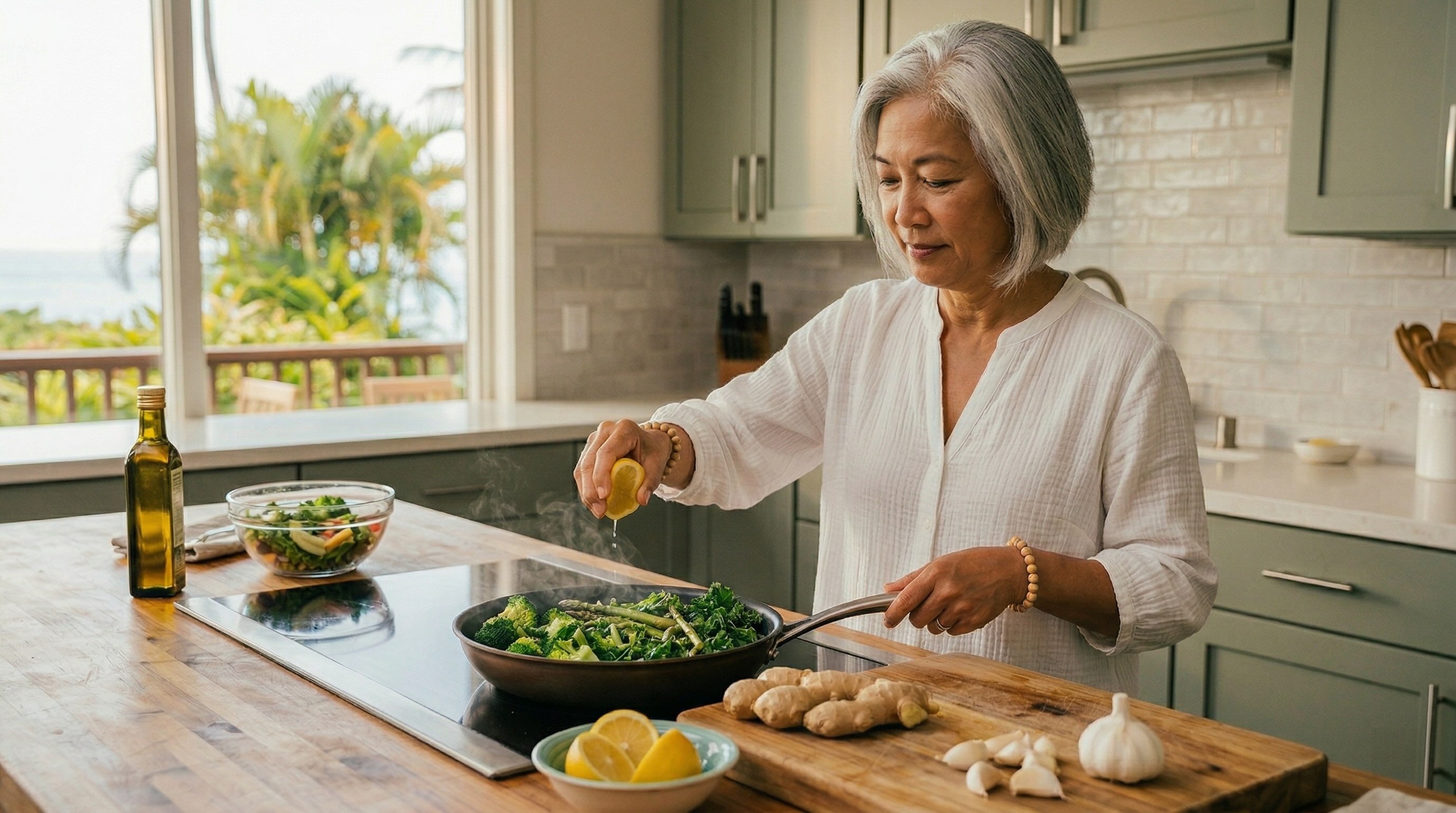
Salt is part of many foods we eat in Hawaiʻi. From shoyu to saimin to Spam, sodium shows up in everyday meals — often in larger amounts than we realize. This guide explains how to lower your sodium intake in practical, realistic ways that protect your heart.
Too much sodium over time raises blood pressure, increases fluid retention, and forces your heart to work harder. Even moderate reductions can improve blood pressure within weeks.
If you’re building a strong foundation, start with our guide on How to Eat for Heart Health in Hawai’i.
If you live outside of Hawaiʻi, the same heart-healthy principles apply. Learn more here.
Quick Summary: Lowering Salt in Hawaiʻi
- Aim for less than 2,300 mg of sodium per day (or closer to 1,500 mg if you have high blood pressure, heart failure, or kidney disease).
- Switch to low-sodium shoyu or dilute regular shoyu.
- Rinse canned beans and vegetables before using them.
- Use ginger, garlic, citrus, and chili peppers instead of adding extra salt.
- Use less of seasoning packets and add fresh ingredients.
Consistent changes can lower blood pressure and reduce swelling over time.
How Much Salt Is Too Much?
Most adults should stay under 2,300 mg of sodium per day — about one teaspoon of salt total.
For people with high blood pressure, heart failure, or kidney disease, the target is often 1,500 mg per day or less.
In Hawaiʻi, that limit can be exceeded quickly:
- 1 tablespoon of regular shoyu may contain nearly half your daily sodium limit.
- A saimin seasoning packet can contain more than 1,000 mg of sodium.
- Processed meats like Spam and Portuguese sausage are highly concentrated sources of salt.
You don’t have to eliminate these foods entirely — but portion size and frequency matter.
Where Salt Hides in Local Foods
Most sodium does not come from the saltshaker. It is already built into processed and restaurant foods.
Higher-sodium choices commonly eaten across the islands include:
- Spam, corned beef, and Vienna sausage
- Portuguese sausage and salted fish
- Saimin seasoning packets
- Canned soups and instant noodles
- Bottled sauces and marinades
- Regular shoyu
Even foods that don’t taste very salty — such as bread or macaroni salad — can contribute significant sodium over the course of a day.
Practical Ways to Lower Salt
1. Choose Lower-Sodium Sauces
- Buy low-sodium shoyu.
- Dilute regular shoyu with water and a squeeze of lemon or vinegar.
This maintains flavor while cutting total sodium.
2. Rinse Canned Products
Rinse canned beans and vegetables under running water for 30–60 seconds. This can remove a meaningful amount of sodium.
3. Build Flavor Without Salt
Use:
- Fresh ginger
- Garlic
- Green onions
- Hawaiian chili peppers
- Lemon or lime juice
- Vinegar
Acid and aromatics enhance flavor so you need less salt overall.
4. Reduce Seasoning Packets
For saimin or instant noodles, use half the seasoning packet and add vegetables, tofu, or lean protein instead.
5. Cook More Often at Home
Restaurant and plate lunch meals are often high in sodium. Preparing food at home allows you to control how much salt is added.
For practical examples, see our guide to Heart-Healthy Plate Lunch Swaps in Hawaiʻi.
Reading Labels: What Matters
When buying packaged foods, don't let "healthy-looking" packaging fool you. Use this guide when shopping at the market:
Choosing lower-sodium versions of foods you already buy is one of the simplest ways to reduce overall intake.
Frequently Asked Questions About Salt and Blood Pressure
Why does salt raise blood pressure?
Sodium causes the body to retain fluid. Extra fluid increases the volume of blood in your vessels, raising blood pressure and straining the heart.
Is sea salt better than regular salt?
No. Sea salt and table salt contain similar amounts of sodium. The body processes them the same way.
Can I use salt substitutes?
Many salt substitutes contain potassium instead of sodium. For people with kidney disease or those taking certain blood pressure medications, excess potassium can be unsafe. Consult your healthcare provider before using them.
What are the saltiest foods in Hawaiʻi?
Processed meats, regular shoyu, seasoning packets, canned soups, and salted fish are among the highest-sodium foods commonly eaten across the islands.
Take Action This Week
Choose one change:
- Switch to low-sodium shoyu.
- Rinse canned products before cooking.
- Use half a seasoning packet.
Reducing sodium is one of the most effective ways to lower blood pressure and protect long-term heart health.
Please contact your insurance provider with specific questions about billing or insurance.
Any information provided on this website is intended for general educational purposes and is not intended to be medical advice. You should always consult with your own medical provider about your health and medical questions and never rely on this or any other website alone to make medical decisions. Do not delay seeking medical advice or disregard any medical advice you have received from your provider because of anything you read on the website.

.jpg)
.jpg)