
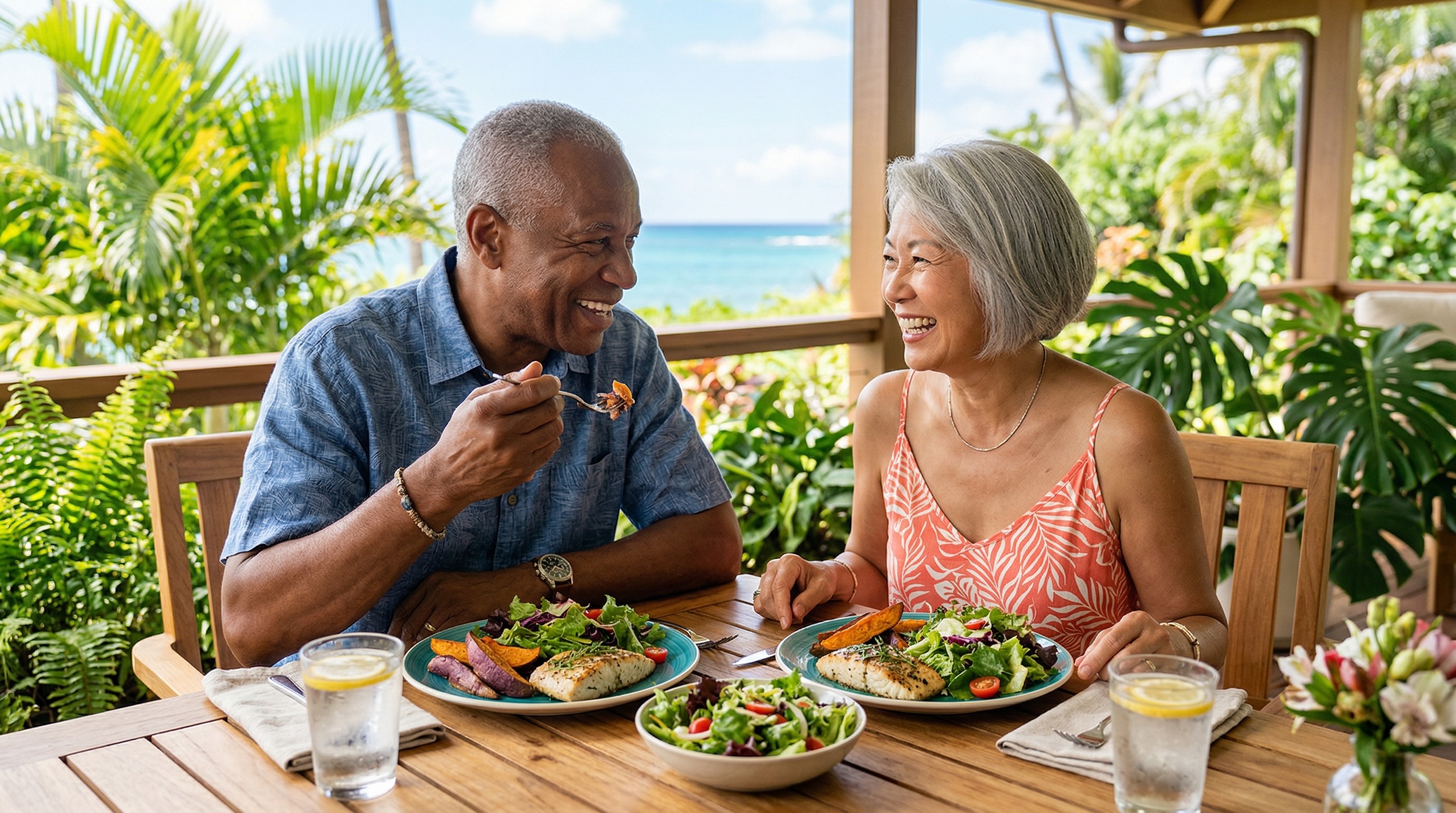
In Hawaiʻi, food is more than something you eat. It’s family, culture, celebration, and connection. From plate lunches to potlucks, from backyard barbecues to first birthdays, our favorite dishes bring us together.
Many people across the islands are also living with high blood pressure, heart failure, or type 2 diabetes. If that’s you — or someone you love — here’s the encouraging news: you do not have to give up the foods you grew up with to take care of your heart.
With a few thoughtful changes, you can keep the flavors you love while protecting your blood pressure, blood sugar, and overall heart health.
If you live outside of Hawaiʻi, the same principles for protecting your heart apply. Learn more here.
Quick Summary: Heart-Healthy Eating in Hawaiʻi
- Aim for ½ vegetables, ¼ healthy carbs, ¼ lean protein at most meals.
- Keep sodium under 1,500–2,300 mg per day (about 1 teaspoon of salt total).
- Choose fresh fish, beans, tofu, and lean meats more often than processed meats.
- Try hapa rice instead of large portions of white rice (half brown, half white rice).
- Flavor with ginger, garlic, citrus, and chili instead of extra shoyu.
Small, steady changes matter more than perfection.
The Healthy Plate, Island Style
One of the easiest ways to start eating for your heart is to simply look at your plate.
Instead of counting every calorie or cutting out entire food groups, try this gentle balance:
- ½ your plate: Vegetables
Fill half your plate with options like lūʻau leaves, watercress, choi sum, cabbage, limu (seaweed), broccoli, or a fresh salad. These foods are rich in fiber and help keep your blood pressure and blood sugar steady.
- ¼ your plate: Healthy carbohydrates
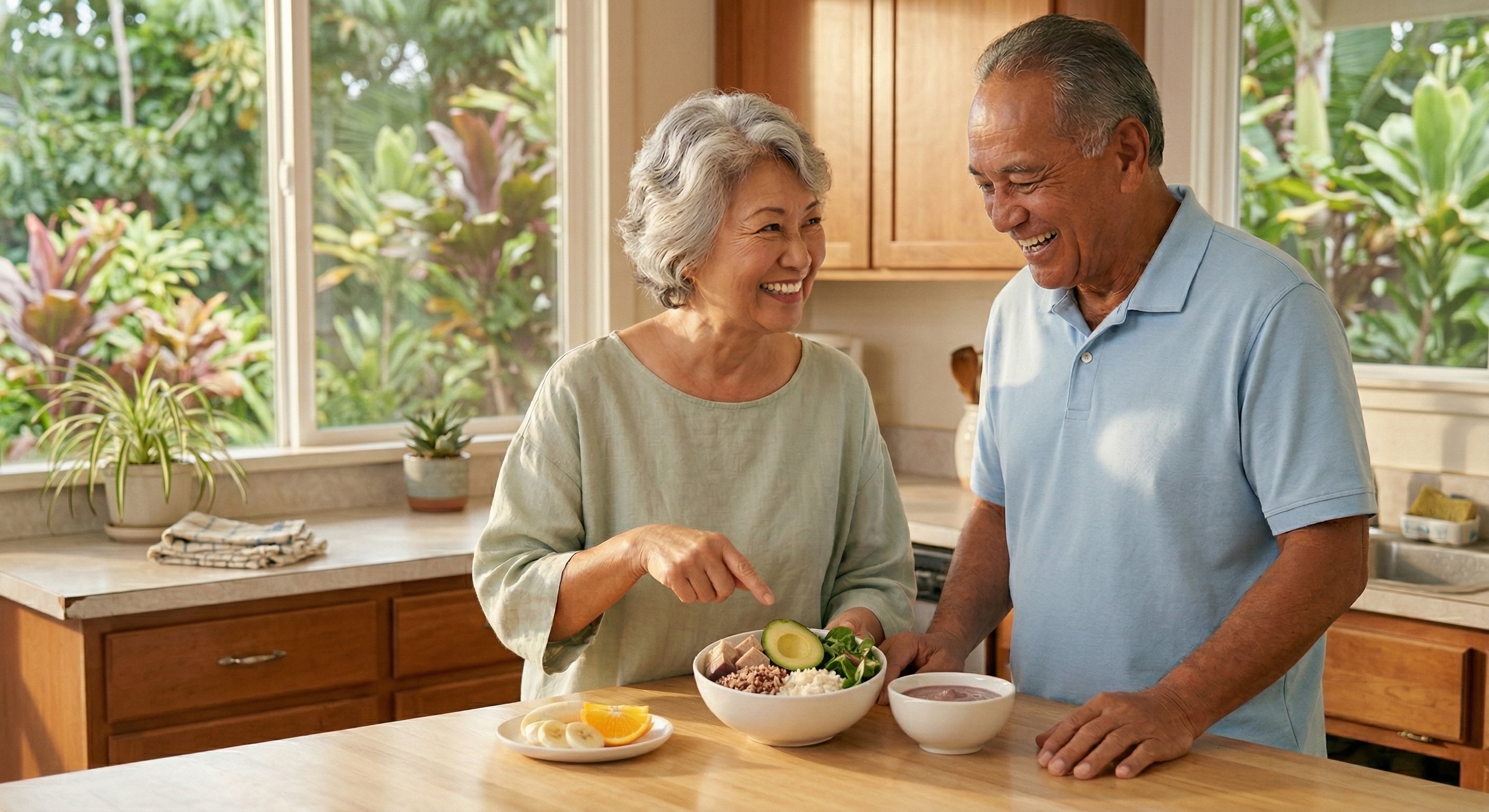
Choose kalo (taro), ʻuala (sweet potato), ʻulu (breadfruit), or hapa rice (half brown, half white rice). These give you steady energy and more nutrients than a large scoop of white rice alone.
- ¼ your plate: Lean protein
Fresh fish like ahi or mahimahi, skinless chicken, tofu, or beans help keep you strong without adding too much saturated fat.
You don’t have to get it perfect. Even shifting your portions a little can make a difference over time.
The Three Biggest Heart Challenges in the Island Diet
Food in Hawaiʻi carries history and pride. Many dishes are tied to family and celebration. This isn’t about calling foods “good” or “bad.” It’s about noticing a few modern habits — like larger portions and more processed ingredients — that can affect heart health over time.
Traditional Hawaiian foods are rich in plants and fresh fish, but many everyday meals now include more added salt, packaged ingredients, and fried options.
Here are three common challenges — and simple ways to adjust while keeping the flavors you love.
1. Salt Adds Up Quickly
Most of the salt we eat doesn’t come from the saltshaker. It’s already mixed into packaged foods, takeout meals, and seasoning blends.
Common high-sodium foods in Hawaiʻi include:
- Spam and other processed meats
- Portuguese sausage and salted fish
- Saimin seasoning packets
- Canned soups
- Shoyu (soy sauce) — just one tablespoon can contain nearly half your daily sodium limit
Too much sodium can raise blood pressure, cause swelling in your legs or ankles, and make your heart work harder than it needs to.
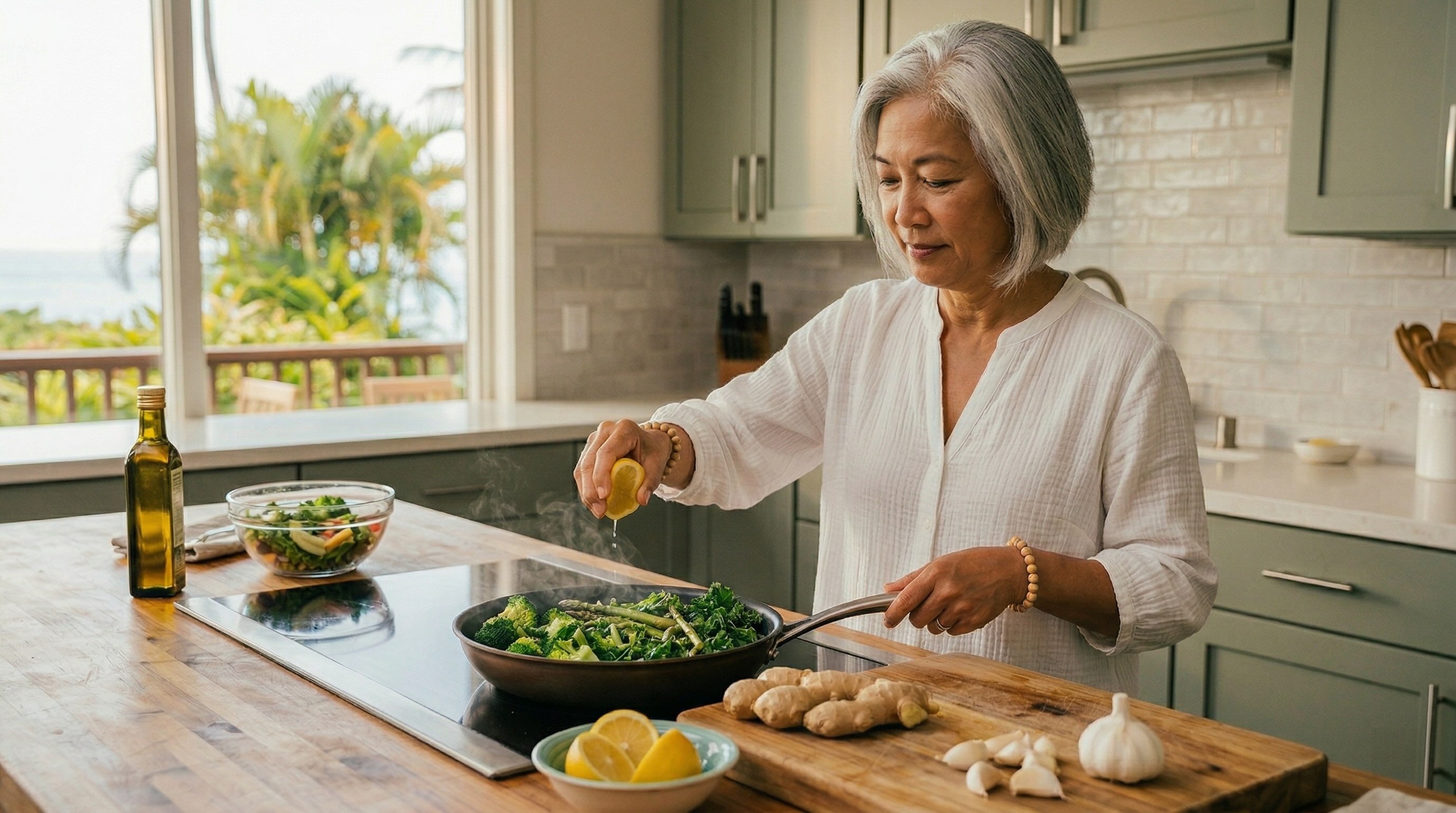
Simple shift: Try low-sodium shoyu, rinse canned beans and vegetables under water, and flavor your food with ginger, garlic, green onions, lemon, or chili peppers instead of extra salt. You may be surprised how much flavor you still get.
For a deeper look at lowering sodium in local meals, read our guide How to Reduce Salt in the Island Diet.
2. Rich Fats in Everyday Favorites
Some island favorites — like certain cuts of pork, processed meats, butter, lard, and full-fat coconut milk — are higher in saturated fat. These ingredients add wonderful flavor and texture, but eating them frequently and in large amounts can raise cholesterol over time.
There’s no need to remove them completely. Instead, think about balance.
Simple shift: Choose leaner cuts of meat when possible, remove the skin from chicken, try lite coconut milk in everyday cooking, and use oils like canola or olive oil instead of lard or butter for most meals.
To learn more about making heart-smart fat choices, visit our guide on Controlling Saturated Fat in the Island Diet.
3. Portion Sizes and Refined Carbohydrates
Rice, noodles, bread, and macaroni salad are comfort foods for many families. They are filling, affordable, and part of almost every gathering.
The challenge isn’t rice itself — it’s when portions get very large and vegetables get crowded out. Large servings of refined carbohydrates and sugary drinks can cause blood sugar to spike and dip, affecting energy levels and long-term heart health.
Simple shift: Try hapa rice (half brown, half white), add more vegetables to your plate before adding extra rice, and choose water or unsweetened tea more often than soda or fruit punch.
You don’t have to give up rice. Just think about the balance on your plate and what’s alongside it.
Heart-Healthy Swaps for Plate Lunch Favorites
You can still enjoy your favorite local dishes. The goal isn’t to eliminate them — it’s to make them work better for your body.
Spam Musubi
Try Lite Spam or swap in grilled tofu. Use brown rice or a 50/50 rice mix to add fiber and help keep blood sugar steady.
Kalua Pork & Cabbage
Choose pork loin instead of pork butt and double the cabbage. More vegetables, same comforting flavor.
Macaroni Salad
Replace some or all of the mayonnaise with plain Greek yogurt. Add grated carrots and celery for crunch and natural sweetness.
Fried Saimin
Use less of the seasoning packet and add extra bok choy, bean sprouts, and mushrooms.
Loco Moco
Use lean ground beef or turkey and make gravy with low-sodium broth instead of canned gravy. Serve over hapa or brown rice.
You don’t have to change everything at once. Pick one favorite dish this week and try one small adjustment.
For a full list of practical modifications, see our detailed guide to Heart-Healthy Plate Lunch Swaps in Hawaiʻi.
Budget-Friendly Tips for Eating Healthy in Hawaiʻi
Healthy eating should feel realistic — especially with the high cost of groceries across the islands.
- Choose frozen vegetables.
- Rinse canned beans and vegetables.
- Buy rice and dried beans in bulk.
- Buy local and in season.
- Cook at home when you can.
Taking care of your heart doesn’t have to mean expensive specialty foods. Many traditional staples — like kalo, ʻuala, beans, and fish — are naturally heart-friendly.
Start Small and Stay Consistent
Caring for your heart does not mean giving up your culture or the meals you share with family. It means choosing the best parts of our island traditions — fresh fish, taro, sweet potato, vegetables, and gathering together — while being a little more mindful about added salt, fat, and portion size.
Start with one small change this week. Add more vegetables to your plate. Try hapa rice. Switch to low-sodium shoyu.
Over time, these small steps can lower blood pressure, steady blood sugar, and help you stay healthy for the people who matter most.
Frequently Asked Questions About Heart-Healthy Eating in Hawaiʻi
What is a heart-healthy diet in Hawaiʻi?
A heart-healthy diet in Hawaiʻi focuses on fresh fish, vegetables, taro (kalo), sweet potato (ʻuala), breadfruit (ʻulu), beans, and whole grains. It limits processed meats, excess salt, saturated fat, and large portions of white rice.
How much sodium should I eat each day?
Most adults should aim for less than 2,300 mg of sodium per day. If you have high blood pressure, heart failure, or kidney disease, your provider may recommend closer to 1,500 mg per day.
For detailed tips tailored to local foods, visit our guide on How to Reduce Salt in the Island Diet.
Can I still eat plate lunch if I have high blood pressure?
Yes — with a few adjustments.
You can find step-by-step examples in our guide to Heart-Healthy Plate Lunch Swaps in Hawaiʻi.
Is poi good for heart health or diabetes?
Poi (made from kalo/taro) is naturally low in fat and contains fiber. Compared to white rice, it has a lower impact on blood sugar when eaten in moderate portions.
Learn more in our guide on Fiber and Whole Grains for Heart Health in Hawaiʻi.
How can I lower my blood pressure naturally?
You can help lower blood pressure by reducing salt, eating more vegetables and fiber, choosing lean proteins, and staying active.
For a full meal framework, explore our Hawaiʻi-Style DASH Diet guide.
Building heart health in Hawaiʻi starts with information you can actually use. Keep going — one plate at a time.
Please contact your insurance provider with specific questions about billing or insurance.
Any information provided on this website is intended for general educational purposes and is not intended to be medical advice. You should always consult with your own medical provider about your health and medical questions and never rely on this or any other website alone to make medical decisions. Do not delay seeking medical advice or disregard any medical advice you have received from your provider because of anything you read on the website.
.jpg)