What is Tai Chi?
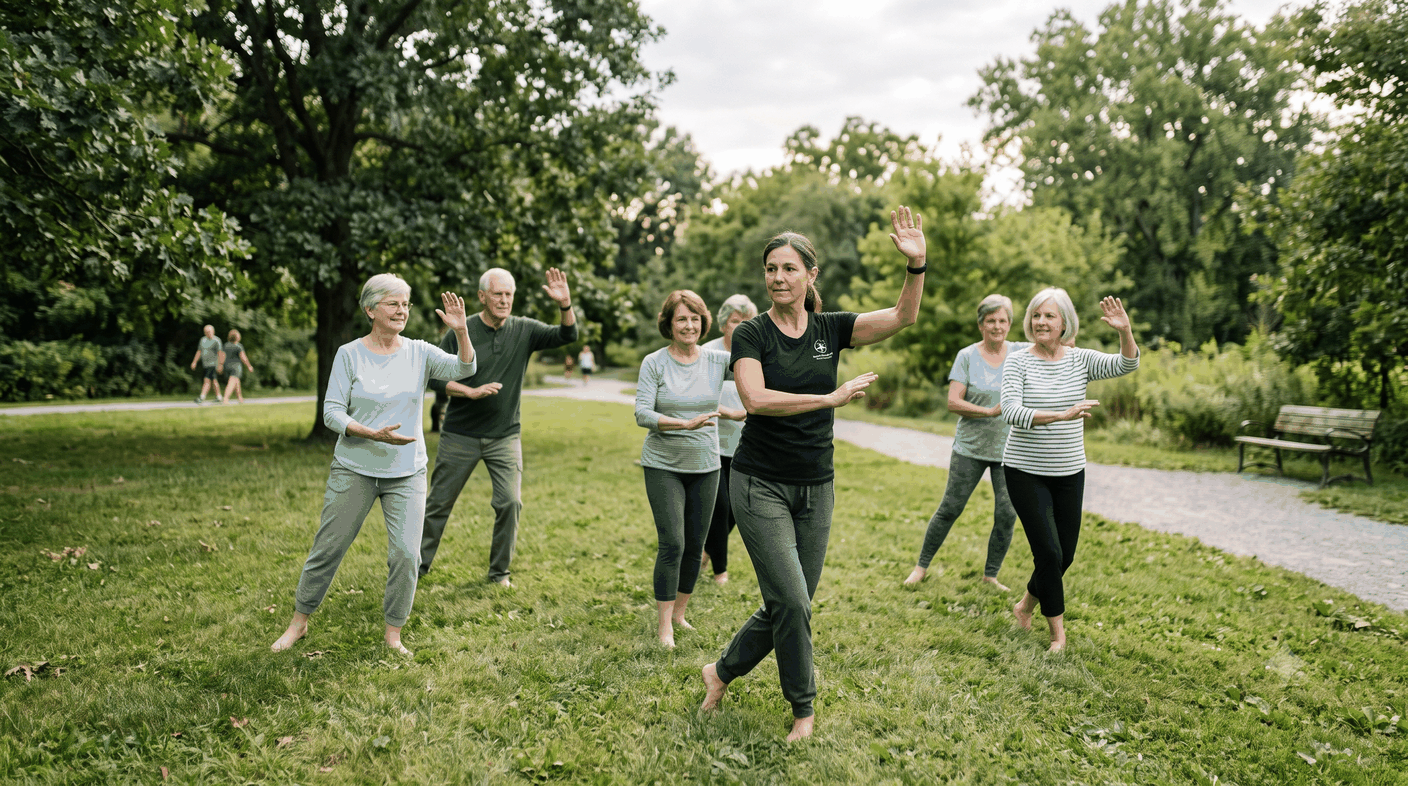
Tai Chi is a gentle form of exercise that began as a martial art. Today, it is practiced for its health benefits. It involves a series of slow, flowing movements that glide into one another without pause.
When you practice Tai Chi, you focus on deep, calm breathing and keeping your body relaxed. Because the movements are slow and never forced, it is very low-impact and easy on the joints.
Better Balance and Fewer Falls
One of the most important reasons to try Tai Chi is to stay steady on your feet. Research shows that Tai Chi is one of the best ways to prevent falls in older adults.
The movements teach you how to shift your weight mindfully from one leg to the other. This strengthens your core and your leg muscles, which helps you feel more grounded and confident when walking or reaching for items around the house.
Benefits for Your Heart, Joints, and Blood Sugar
Tai Chi does more than just help you stand taller; it helps your body work better from the inside out:
- For your heart: Regular practice can help lower high blood pressure and improve circulation. It is a great, low-stress way to keep your heart healthy without the strain of heavy cardio.
- For joint pain: If you have arthritis, you know that motion is lotion. The gentle stretching of Tai Chi helps reduce stiffness and pain in the knees, hips, and hands.
- For blood sugar control: Studies have shown that Tai Chi can help people with Type 2 diabetes manage their blood sugar levels. It helps your body use insulin more effectively and reduces the stress that often causes blood sugar spikes.
A Simple 5-10 Minute Beginner Routine
You do not need special equipment or a lot of space. You can even do these movements while sitting in a sturdy chair.
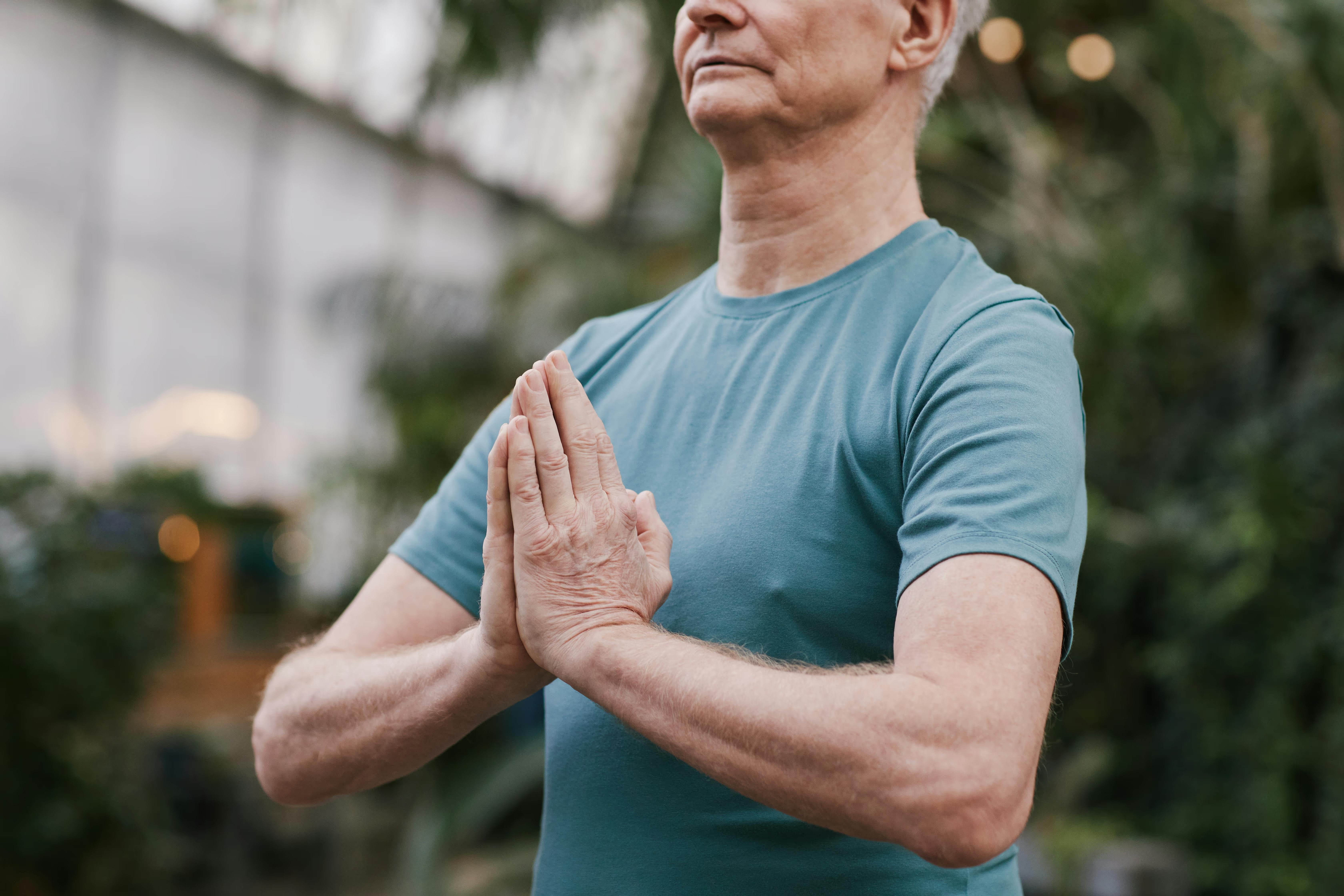
- Deep Breathing (The Start): Stand or sit tall with your feet shoulder-width apart. Slowly inhale through your nose as you lift your hands to chest height, palms down. Exhale slowly as you push your hands back down toward your lap.
- Painting the Wall: Imagine there is a wall in front of you. Gently move your hands up and down as if you are lightly painting it with your palms. Keep your elbows soft and your shoulders relaxed.
- Waving Hands Like Clouds: Hold one hand in front of your face and the other near your waist. Slowly switch their positions as you turn your torso gently from side to side. It should feel like a slow, rhythmic sway.
- Gathering Energy: Imagine you are scooping up air in a big circle. Bring your hands together near your belly, take a deep breath, and feel your body relax.
Safety Tips
Your safety is the most important thing. Keep these tips in mind:
- Listen to your body: If a movement hurts, stop or make it smaller. Never push through sharp pain.
- Use a chair: If you feel unsteady, you can perform every Tai Chi movement while seated. You will still get the benefits of the breathing and upper-body movement.
- Stay hydrated: Drink a little water before and after your session.
- Wear the right shoes: Wear flat, comfortable shoes with good grip, or practice in bare feet if your floor is not slippery.
How to Find a Class
Tai Chi is even more fun with others. You can find classes in several places:
- Local senior centers: Many offer free or low-cost classes.
- Community centers and YMCAs: These often have beginner-friendly programs.
- Online videos: If you prefer to stay home, search YouTube for “Tai Chi for Seniors” or “Chair Tai Chi.”
You can find examples of simple beginner Tai Chi routines online, including:
- Tai Chi for Beginners
- Tai Chi for Fall Prevention
Small Steps You Can Try This Week
You do not have to become an expert overnight. Try these two small things this week:
- Try painting the wall movement for two minutes while waiting for your morning coffee or tea to brew.
- Practice three deep breaths while sitting quietly, focusing on letting your shoulders drop away from your ears.
You’ve got this. Tai Chi is not about being perfect; it is about moving at your own pace and feeling a little better every day. Whether you are standing or sitting, every movement counts toward a stronger, steadier you.
References
- https://pmc.ncbi.nlm.nih.gov/articles/PMC9644143/
- https://pubmed.ncbi.nlm.nih.gov/24159346/
- https://pubmed.ncbi.nlm.nih.gov/33769556/
- https://pubmed.ncbi.nlm.nih.gov/41075277/
- https://www.nia.nih.gov/news/tai-chi-especially-enhanced-version-may-improve-cognition-older-adults-memory-problems
Any information provided on this website is intended for general educational purposes and is not intended to be medical advice. You should always consult with your own medical provider about your health and medical questions and never rely on this or any other website alone to make medical decisions. Do not delay seeking medical advice or disregard any medical advice you have received from your provider because of anything you read on the website.